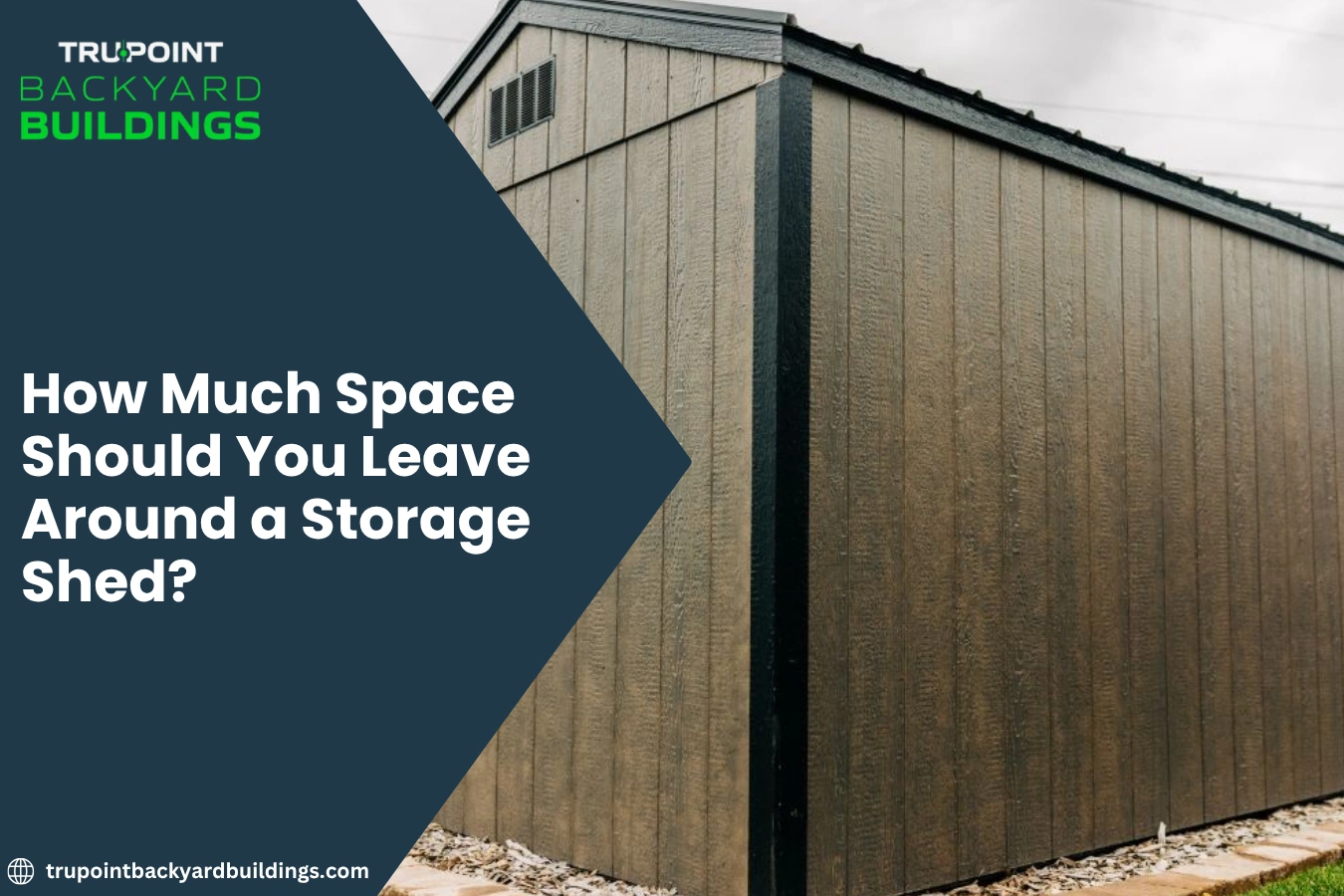
Finding the right spot for a storage shed involves more than choosing an open area in your backyard. You also need to think about how much space you should leave around the shed.
The right amount of clearance can make your shed easier to access, maintain, and enjoy for years. It can also help with drainage, airflow, landscaping, and future repairs.
So, how much space should you leave around a storage shed? In many situations, leaving about 2 to 3 feet of open space around the shed is a practical starting point. However, the ideal amount depends on your property, shed size, doors, surrounding features, and local requirements.
Before choosing your final shed location, here are the most important things to consider.
Why Space Around a Storage Shed Matters
It can be tempting to place a shed as close as possible to a fence, house, or other structure. After all, you probably want to make the most of your available yard space.
However, leaving some breathing room around your storage shed can make a big difference.
Adequate clearance gives you room to walk around the shed, inspect the exterior, clean the area, and handle maintenance when needed. It also keeps the shed from feeling squeezed into the property.
Planning this space before installation is much easier than discovering later that you cannot comfortably reach one side of your shed.
Is 2 to 3 Feet Around a Storage Shed Enough?
For many properties, approximately 2 to 3 feet of clearance around accessible sides of a storage shed can provide useful working space.
This amount of room may allow you to:
- Walk around the shed more comfortably
- Inspect siding and trim
- Remove leaves and debris
- Reach areas that need cleaning or maintenance
- Manage grass and weeds around the structure
- Keep nearby plants from growing directly against the shed
More space may be helpful depending on how you plan to use the area.
For example, if you expect to move a lawn mower, wheelbarrow, garden cart, or other equipment beside the shed, a wider path could make everyday use much easier.
Leave Enough Room for Shed Doors
Do not forget about the space directly in front of your shed.
Your doors need enough clearance to open properly, and you need enough room to comfortably move items in and out.
Think about what you plan to store inside. A shed used for small gardening tools may have different access needs than one holding a riding mower, bicycles, outdoor equipment, or large storage bins.
Give yourself enough room to open the doors fully and create a clear path into the shed.
If you plan to add a ramp, include the ramp and the space needed to approach it when deciding where your shed should go.
Think About Maintenance Access
Even a well built storage shed may need occasional cleaning, inspection, or maintenance.
If one side is placed extremely close to a fence or another structure, reaching that area later can become difficult.
You may need access to clean the siding, inspect the roof edge, remove debris, trim vegetation, or take care of small repairs.
Leaving a reasonable gap around the shed gives you room to work without squeezing into a narrow space.
This simple planning decision can make caring for your shed much easier over time.
Allow Room for Good Drainage
Water management should also be part of your shed placement plan.
You do not want water collecting around the base of your shed after heavy rain. Standing water and consistently wet ground can create unnecessary problems around any outdoor structure.
Look at how water naturally moves through your property. Avoid placing the shed in a low area where water tends to collect.
The site should be level and properly prepared before the shed is installed. Keeping some open space around the structure also makes it easier to monitor drainage and address problem areas if they appear.
At TruPoint Backyard Buildings, proper site preparation is an important part of the installation process. A level location helps provide the right starting point for your new shed.
Consider Nearby Trees and Plants
Trees, shrubs, and garden beds can make your backyard look beautiful, but they should also be considered when choosing your shed location.
Avoid placing large plants directly against the shed.
Branches can rub against the siding or roof, while thick vegetation can make it harder to inspect and maintain the exterior. Leaves and other organic debris may also collect in tight spaces.
Remember that plants grow.
A small shrub today could become much larger a few years from now. Give landscaping enough room to mature without crowding your storage shed.
You should also look overhead. Large branches hanging directly above the shed may create additional cleanup and maintenance concerns.
Check Property Lines and Local Requirements
The amount of space you personally want around your shed is only part of the decision.
Your local area may have rules about where accessory structures can be placed. These requirements can vary depending on your property and location.
Before installation, check whether your area has setback requirements, permits, easements, neighborhood rules, or other restrictions that could affect shed placement.
A setback is the required distance between a structure and a property line or another designated area.
Do not assume that a few feet of clearance will automatically satisfy local requirements. Confirm the rules that apply to your property before choosing the final location.
Leave Space Between the Shed and Your House
If your storage shed will be located near your home, consider leaving enough room to comfortably access both structures.
A narrow gap can become difficult to clean and maintain. It may also collect leaves and other debris.
More space can create a useful walkway while making it easier to reach the exterior walls of both your house and shed.
Think about how people will move through the area as well. If the path between your home and shed will be used regularly, you may want more clearance than you would on a rarely accessed side.
Think About How You Will Use the Shed
The best shed placement should support the way you plan to use the structure.
Ask yourself a few simple questions:
- What will I store inside?
- How often will I use the shed?
- Will I move large equipment through the doors?
- Do I need a ramp?
- Will I need access to every side?
- Do I want a walkway around the shed?
- Could I add landscaping nearby later?
Thinking about these details now can prevent frustration after installation.
For example, if you use your shed several times a week for lawn equipment, easy access may be more important than placing it in the smallest possible corner of your yard.
Should You Leave Extra Space for Future Plans?
If your yard allows it, a little extra room can give you more flexibility later.
Your needs may change over time. You could decide to add landscaping, create a pathway, reorganize your backyard, or simply need more working room around the shed.
Leaving extra space does not mean wasting your yard. It can make the area around your shed more functional.
A well planned shed should feel like it belongs in your backyard rather than something that was squeezed into the only available spot.
What About Small Backyards?
Not every property has enough room to leave several feet on every side of a shed.
If you have a smaller backyard, focus on using the available space wisely.
Prioritize the areas that need regular access, especially the entrance. You should also consider maintenance access, drainage, nearby property lines, and any local placement requirements.
Choosing the right shed size becomes especially important when space is limited.
A slightly smaller shed with comfortable access may work better than a larger shed that leaves almost no usable room around it.
TruPoint Backyard Buildings offers a wide selection of shed sizes and customizable options, which can help you find a design that works with your available backyard space.
Plan Your Shed Placement Before Installation
One of the easiest ways to understand how a shed will fit is to mark the proposed dimensions in your yard.
Measure the shed footprint and mark the corners. Then step back and look at the surrounding space.
Walk around the marked area and imagine using the shed.
Can the doors open comfortably?
Can you move equipment through the entrance?
Can you walk around the sides that need access?
Is there enough room between the shed and nearby fences, landscaping, or structures?
This simple exercise can help you spot placement problems before your shed arrives.
How Much Space Should You Leave Around a Storage Shed?
As a practical starting point, consider leaving around 2 to 3 feet of accessible space around your storage shed when your property allows it.
However, there is no single measurement that works for every backyard.
You may need more room for doors, ramps, equipment, walkways, landscaping, or maintenance. Local setback requirements may also require a different amount of space.
The goal is to choose a location that gives your shed enough room to function properly while still making good use of your backyard.
Find the Right Storage Shed for Your Space
The right storage shed starts with thoughtful planning.
At TruPoint Backyard Buildings, you can choose from a variety of sizes and customize your shed based on your storage needs and available space. With premium construction and personalized design options, you can create a shed that fits both your backyard and the way you plan to use it.
Ready to start planning? Get a Quote from TruPoint Backyard Buildings and tell our team what you need. We can help you take the next step toward a storage shed that works for your property.
Have questions about shed size, placement, features, or installation? Contact Us and speak with the TruPoint team. We are happy to help you plan with confidence.
Explore More Shed Options With Our 3D Builder
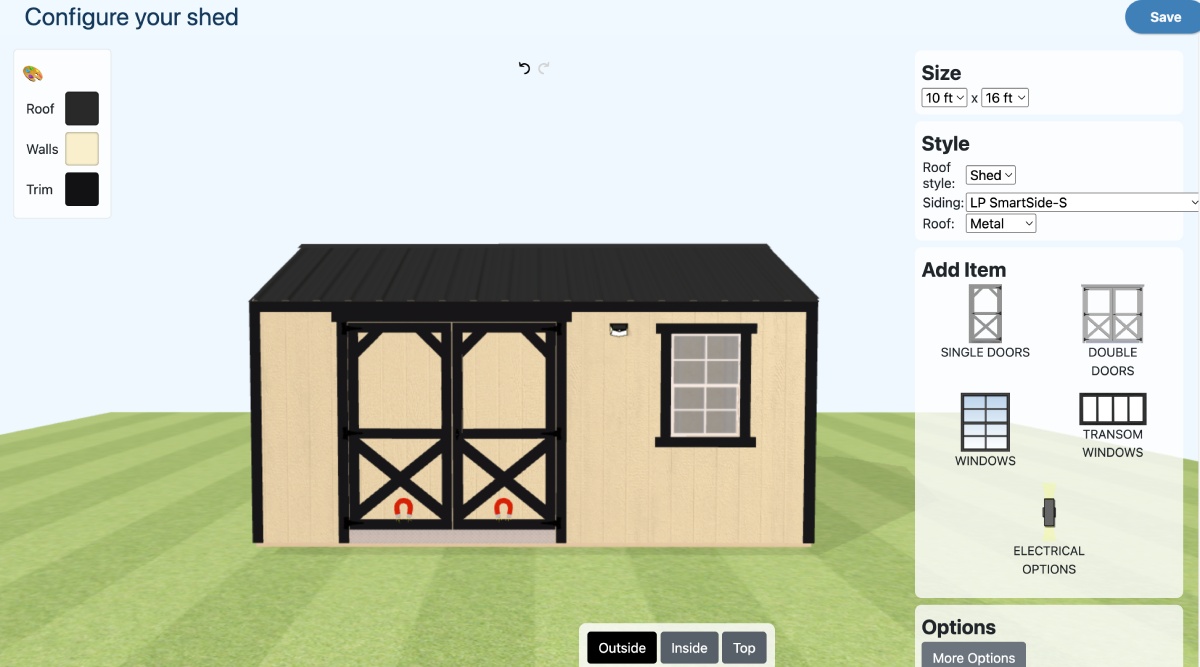
Still deciding what type or size of shed would work best?
Use TruPoint Backyard Buildings’ 3D Builder Tool to explore different shed designs and customize your structure. You can experiment with sizes, colors, windows, doors, and other options to get a better idea of what works for your backyard before moving forward.
Start designing and see how the right shed can transform your outdoor space.